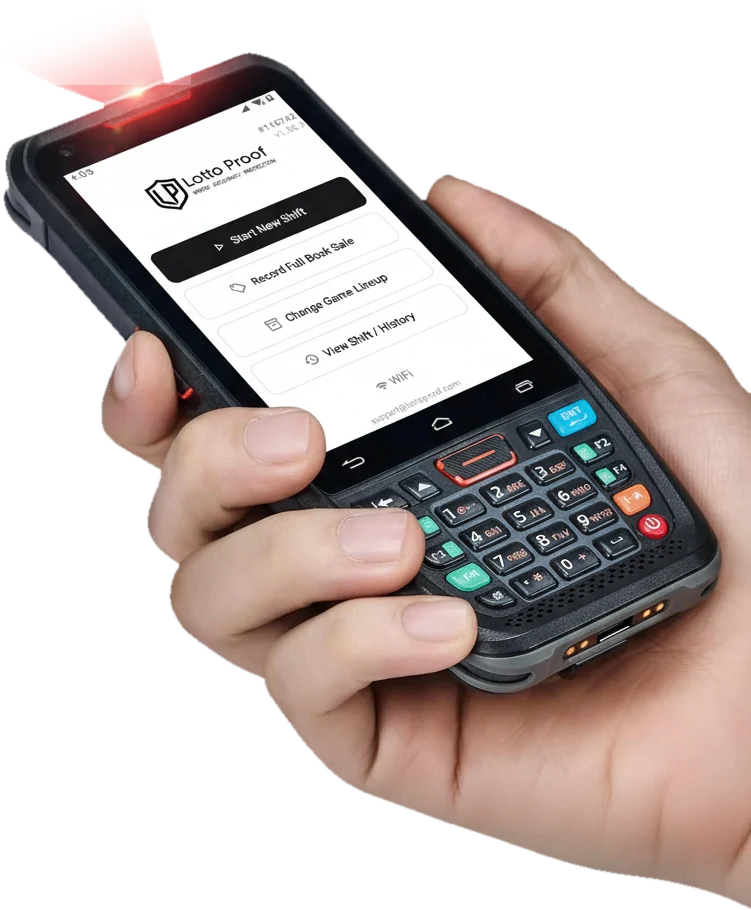
Lottery retailers track scratch-off tickets in one of five ways: counting by hand, a phone-camera app, a Bluetooth scanner with software, a module in their POS or a lottery-provided tool, or a dedicated scratcher scanner. The right choice depends on how many shifts you run, whether you're at the store every day, and how much a missing book would cost you.
The options at a glance
| Option | How it works | Good fit when | Watch out for |
|---|---|---|---|
| Counting by hand | Cashier writes down each book's ticket number on a log or spreadsheet | One shift a day and a small rack | 15–45 minutes per shift, math errors, missing books found late |
| Phone-camera app | An app reads each barcode with the phone camera | Occasional counts, no new hardware | Glare on foil tickets, careful aiming, 3–5 seconds per book |
| Bluetooth scanner + software | A handheld scanner paired to a phone, tablet, or PC | You already have the scanner and software | Pairing drops, two devices to charge, no screen on the scanner |
| POS module or lottery-provided tool | Scratcher tracking inside software you already use | It already fits your daily routine | Ask whether it confirms what's physically in the rack and ties results to each shift |
| Dedicated scratcher scanner (Lotto Proof) | A handheld with a built-in screen scans the rack; results go to the owner's dashboard | Multiple shifts, an owner who isn't always on site, or several stores | A monthly subscription ($39.99 per location, scanner included) |
What matters most when choosing
| What matters | By hand | Phone app | Bluetooth + software | POS or lottery tool | Lotto Proof |
|---|---|---|---|---|---|
| Confirms what's physically in the rack | Yes | Yes | Yes | Depends | Yes |
| Ties every change to a shift | Depends | Depends | Depends | Depends | Yes |
| Flags a missing book the same day | Depends | Depends | Depends | Depends | Yes |
| Owner sees results remotely | No | Depends | Depends | Depends | Yes |
| Nothing to pair with a phone or PC | Yes | Yes | No | Yes | Yes |
Physical verification
Systems built on activation and settlement records show what should be in the rack. Only a physical scan confirms what is there. If books ever go missing, this is the difference that matters.
Shift accountability
Knowing that tickets sold isn't enough when the numbers are off. You need to know which shift it happened in. Look for a system that saves every scan and ties changes to a shift.
Time per shift
Counting by hand typically takes 15 to 45 minutes per shift. A barcode scan of the same rack takes 1 to 3 minutes. Across three shifts a day, that difference is hours of labor a week.
Owner visibility
Absentee and multi-store owners need results from their phone, and alerts when something is wrong, without calling the store.
Where Lotto Proof fits
Lotto Proof is built for the owner: every shift's scan is saved, missing books are flagged on the next scan with an email alert, and every store is visible from one login. It needs no POS integration and no setup beyond scanning. See how the scanner works and pricing.
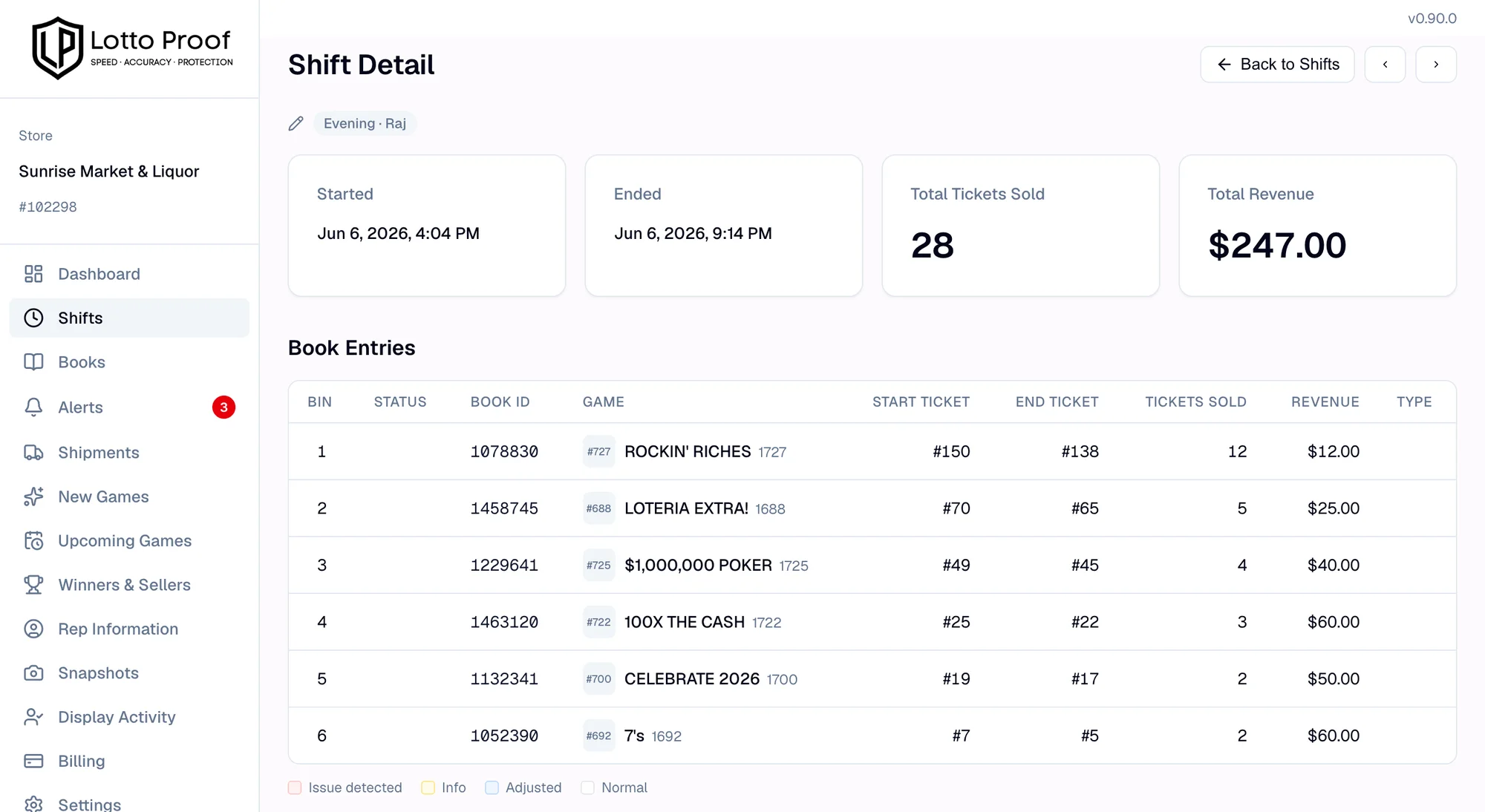
- Who was on shift
- Tickets sold and sales, worked out from the scans
- The start and end ticket of every book, so any number can be checked
Frequently asked questions
What is the best way to track scratch-off tickets in a store?
The most reliable method is a physical scan of every book at every shift change, compared with the previous scan. It shows tickets sold per shift and catches missing books the same day. Whether you do that with a dedicated scanner, a phone app, or software you already own depends on how many shifts you run and how much time counting costs you.
Is a free lottery-provided counting tool enough?
It can be, and it is worth trying. Ask whether it shows which shift each ticket sold in, whether you can see results from your phone when you're away from the store, and whether it alerts you when a book goes missing. Those answers decide whether you also need a tool built around the owner.
What should I ask any scratcher tracking vendor?
How long a full rack scan takes, what hardware is needed and who owns it, whether it works without POS integration, how missing books are detected and reported, whether results trace to a specific shift, what it costs per location, and whether there is a contract.
Try it free for 30 days
$0 today, then $39.99/month per location, scanner included. No contract, cancel anytime.